
Why Do Ceramics Bubble?
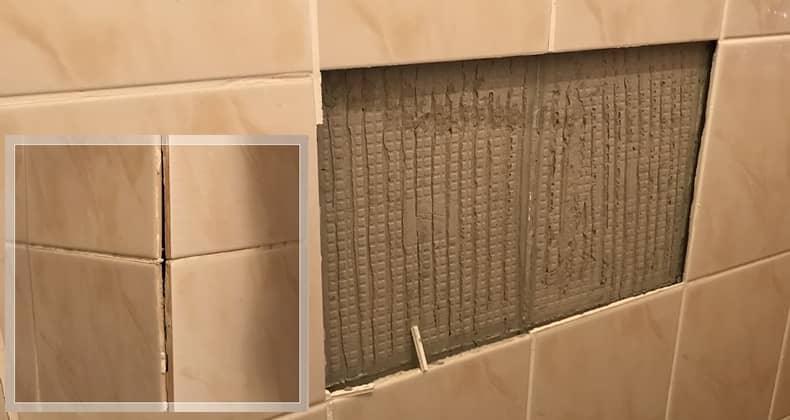
The problems of bubbling and detachment from the surface in ceramics are common issues encountered in various application areas, from residential to commercial buildings. This problem, which starts with a hollow sound or slight elevation from the ceramics, can lead to cracking over time.
Why Do Ceramics Bubble? The 7 Most Common Causes and Permanent Solutions
The problems of bubbling and detachment from the surface in ceramics are common issues encountered in various application areas, from residential to commercial buildings. This problem, which starts with a hollow sound or slight elevation from the ceramics, can eventually lead to cracking, breaking, and complete detachment from the surface. Ceramics bubbling, especially in bathrooms, kitchens, balconies, terraces, and areas exposed to heavy use, often stem from mistakes made during application or incorrect product selection.
So, why do ceramics bubble and what is the permanent solution to this problem? Here are the 7 most common causes of ceramic bubbling and professional solution methods.
1. Insufficient Surface Preparation
One of the biggest mistakes made in ceramic applications is not giving enough importance to surface preparation. Dust, oil, loose particles, and level irregularities on the substrate can prevent the ceramic adhesive from fully adhering to the surface.
Especially in applications carried out on curved and uneven surfaces, the non-homogeneous spread of the adhesive can lead to the formation of voids under the ceramics. These voids can cause bubbling problems over time due to mechanical loads and temperature changes.
Solution Suggestion:
-
The surface must be thoroughly cleaned before application.
-
Surface irregularities should be corrected with repair and leveling mortars.
-
In necessary cases, an appropriate primer application should be made.
2. Use of Incorrect Ceramic Adhesive
Not every ceramic application has the same technical properties. The preference for standard adhesives for large-sized ceramics, granite ceramics, or outdoor applications can lead to adhesion problems over time.
It is crucial to use C2 class adhesives with high adhesion strength and flexible S1 or S2 ceramic adhesives, especially for large-sized porcelain ceramics.
Solution Suggestion:
-
Adhesives suitable for the application area should be preferred.
-
High-performance and flexible adhesives should be used for large-sized ceramics.
-
Different products should be preferred for indoor and outdoor applications.
3. Formation of Voids Under Ceramics
One of the main reasons for the bubbling of ceramics is leaving voids under the ceramics during application. Non-homogeneous application of the adhesive or the use of incorrect trowel sizes can lead to the formation of air pockets behind the ceramics.
Over time, the loads on these voided areas can cause the ceramics to move and bubble.
Solution Suggestion:
-
Appropriate trowel sizes should be used.
-
The double-sided adhesive method should be applied for large-sized ceramics.
-
The adhesive should be spread homogeneously on the back of the ceramics.
4. Inadequate or Faulty Waterproofing
One of the significant reasons for ceramic bubbling, especially in bathrooms and wet areas, is inadequate waterproofing applications. Water seeping through the joints and between the ceramics can accumulate under the ceramics, negatively affecting the performance of the adhesive.
Many users believe that ceramics are waterproof. However, ceramic coverings alone do not provide waterproofing. Professional waterproofing systems must be present under the ceramics.
Solution Suggestion:
-
Waterproofing must be applied in shower areas and wet spaces.
-
Corner joints and plumbing transitions should be detailed professionally.
-
Joint fillers with low water absorption should be preferred.
5. Temperature Changes and Structural Movements
Especially in balconies, terraces, and exterior applications, temperature differences cause ceramics to expand and contract. Application systems that do not have sufficient flexibility can create tension over time, leading to the separation of ceramics from the surface.
Similarly, settlements and structural movements occurring in new buildings can negatively affect ceramic applications.
Solution Suggestion:
-
Flexible ceramic adhesives should be used.
-
Dilatation joints should not be neglected.
-
Movable joints should be supported with appropriate elastic filling materials.
6. Non-Compliance with Application Rules
The mixing ratios, open waiting times, and application thicknesses specified in the technical data sheets of ceramic adhesives are determined for maximum performance. Over-diluting the adhesive or applying it outside the specified times can significantly reduce adhesion performance.
Solution Suggestion:
-
The technical application instructions specified by the manufacturer should be followed.
-
Open waiting times should be taken into account.
-
Ambient temperature and humidity levels should be considered during application.
7. Use of Poor Quality or Inappropriate Products
The quality of construction chemicals preferred in ceramic applications directly affects the lifespan of the application. Low-performance adhesives and joint fillers may seem economical in the short term but can lead to high maintenance and repair costs in the long run.
Professional applications carried out with quality products help ceramics maintain their original performance for years.
Solution Suggestion:
-
High-performance and certified products should be preferred.
-
Ceramic adhesive, waterproofing, and joint fillers should be evaluated as a system together.
-
Professional application methods should be preferred.
How to Prevent Ceramic Bubbling?
The most effective way to prevent ceramic bubbling is to combine the correct product selection with professional application methods. Well-prepared and solid surfaces, high-performance ceramic adhesives, complete waterproofing applications, and quality joint filling systems can help ceramic coverings maintain their aesthetic appearance and durability for many years.
As VOX Construction Chemicals, our developed professional system solutions; waterproofing products, ceramic adhesives, joint filling systems, and repair mortars help you achieve reliable and long-lasting applications in your living spaces.
It should be noted that the bubbling problems in ceramics often do not stem from a single cause. When the correct product selection, appropriate surface preparation, and professional application techniques are evaluated together, it is possible to largely prevent these problems.