
Considerations When Choosing Ceramic and Granite Adhesives: What Do S1, S2, C1, C2 Classes Mean?
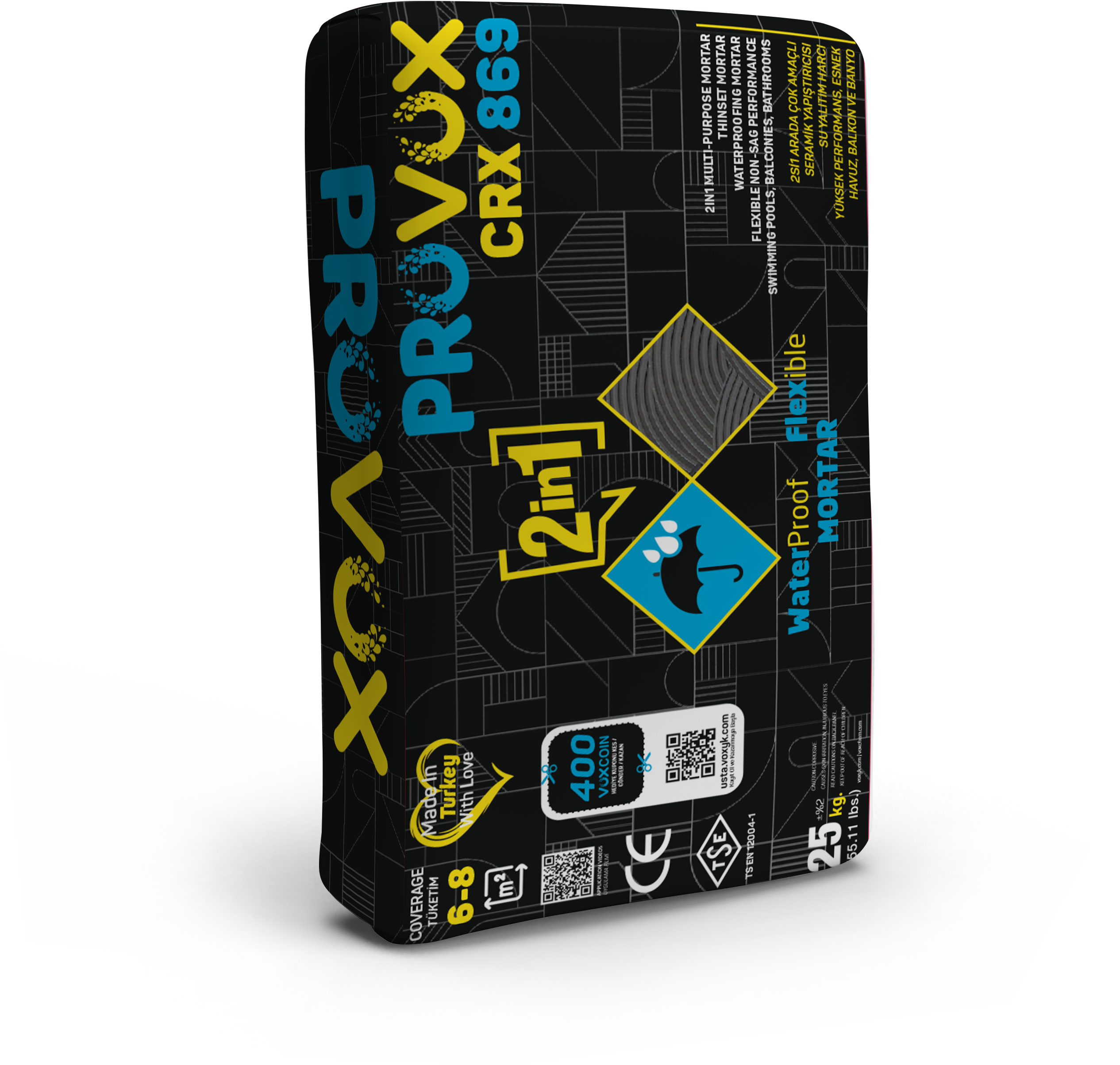
Considerations When Choosing Ceramic and Granite Adhesives: What Do S1, S2, C1, C2 Classes Mean?
One of the biggest mistakes when renovating a house or laying ceramic, granite, and marble in a large-scale construction project is choosing the wrong adhesive. Over time, tile movement, grout cracking, or hollow sounds under tiles usually result from using mortar unsuitable for environmental conditions.
So, what do the terms C1T, C2TE, C1TES1, or S2 on the packaging mean?
1. What Is the Difference Between Class C1 and C2?
-
Class C1 (Standard Adhesives): Used indoors for bonding small and medium-sized ceramics on walls and floors. It is an ideal and economical solution for dry indoor areas.
-
Class C2 (High-Performance Adhesives): Preferred in areas with heavy foot traffic, outdoor applications, and for installing granite, marble, and large-format tiles. Adhesion strength is significantly higher than Class C1.
2. What Do the Additional Feature Codes Mean?
-
T (Reduced Slip): Prevents tiles from sliding down on vertical surfaces (walls) during application.
-
E (Extended Open Time): Allows a longer period to place tiles after mortar application before it dries. Facilitates workability in hot weather and large areas.
-
S1 and S2 (Flexibility / Elasticity): Especially in underfloor heating systems, terraces, and exterior facades, the floor expands due to temperature differences. S1 (Flexible) and S2 (Super Flexible) adhesives accommodate this expansion and prevent tile cracking.
Which Adhesive Should Be Used for Which Area?
-
Indoor Standard Tiles: Standard C1T class general-purpose ceramic adhesives are sufficient.
-
Underfloor Heating & Terraces: Flexible mortars of class C1TES1 or C2TES1 should be used to withstand temperature changes.
-
Large Format Granite and Marble: Professional mortars with high strength and high flexibility of class C2TES2 should be preferred.
Correct selection of construction chemicals extends the lifespan of your application and prevents costly repairs in the future.